Communication is the key to the success of any organization in the modern business environment that is highly dynamic. The advent of technology has become a critical issue in companies, where companies are at a crossroads of either keeping it old-fashioned and using landlines or adopting the new and more versatile VoIP systems. The decision on using VoIP or a landline can severely affect the cost of operation of your business, its ability to communicate, and scalability. The trend of having versatile and cost-effective communication systems has been on the increase as more and more businesses expand and adjust to new working environments.
This article will assist you in maneuvering through the VoIP vs landline systems and bring you to the correct path of choosing what fits your business requirements.
VoIP vs Landline: Key Differences at a Glance
To make the best decision, it is important to learn about the basic differences that exist between VoIP vs landline systems. We would like to dwell upon the differences in more detail so that you could evaluate which of them suits your business needs.
Technology: VoIP vs. Landline
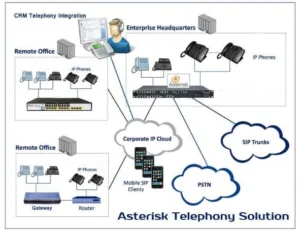
VoIP (Voice over Internet Protocol) is an internet-based telephone system that converts voice calls to digital packets, which are sent by IP networks. On the contrary, landlines employ the use of traditional copper-wire Public Switched Telephone Networks (PSTN) in making connections. Although landlines are known to be reliable, they are not as flexible and sophisticated as VoIP systems.
Setup and Costs: Which Is More Affordable?
The installation of a VoIP system is normally a low-cost setup as it makes use of an internet connection and cloud-based solutions. VoIP is a low-cost solution that is cost-effective, especially when considering the small and medium-sized business, as it has lower startup fees and a forecastable monthly subscription fee of $10 to 15 per customer. Conversely, landline systems are very expensive to install in terms of the installation of wiring and PBX systems. Constant costs of landlines tend to be a minimum of 50 per line, meaning that it is a costly alternative to most organizations.
Features and Flexibility: VoIP Advantages
VoIP has many high-technology features such as video calls, artificial intelligence applications, call intelligence, and voicemail to email. This is very apt with remote teams since it allows mobility and teamwork with mobile applications and desktop integration. Conversely, landlines are only able to support basic calling, voicemail, and basic caller id. VoIP has a far wider variety of capabilities available to businesses that want to simplify their communications and improve customer service.
If you’re interested in the many benefits of VoIP, be sure to read Top 10 Benefits of Using VoIP for Business.
Scalability: VoIP Wins
Scalability is one of the greatest strengths of VoIP as compared to landlines. It is easy to add or drop users in a voip network without any physical installations to take place or any complicated settings. This can be useful, especially in expanding companies or one that has remote employees. Conversely, adding a landline system may need new equipment, rewiring, as well as participation of the telecommunication company, and therefore, it is time-consuming and more expensive.
Call Quality and Reliability: Landlines Lead in Stability
In terms of the quality of the calls, the landlines are unrivalled in their reliability. They do not rely on the internet connection, and thus they are very good in the event of outages or even when the network is overloaded. Nevertheless, VoIP also has a disadvantage of poor quality of calls due to latency or dropped calls that may occur in case of a poor internet connection. As the interconnection speed of the Internet and 5G networks is becoming more accessible, the reliability of VoIP has also increased considerably, making the technology a competitive alternative in the majority of settings.
Remote Work and Collaboration: VoIP Shines
VoIP is superior in remote and hybrid working setups. Under the VoIP system, an employee can use his or her business phone lines and even make a conference call online through video or instant messaging anywhere in the globe as long as they are connected to the Internet. The landlines, however, are not very flexible and can be limited to physical locations, which remote teams cannot have.
VoIP: A Modern Communication Solution
VoIP is changing business communication at a high rate. It enables firms to combine different communication tools into a single platform, whereby it is easy to coordinate as well as monitor performance. The capability to simplify interaction within one system is one of the major merits in ventures that want to minimize complexity to enhance efficiency. In addition, VoIP providers are characterized by strong analytics and AI that can assist businesses in making data-driven decisions and improving customer service.
Advantages of VoIP
- Cost-Efficient: Reduced initial and recurrent expenditures.
- Scalable: Add and delete users with ease.
- Premium Flexibility: Video conferencing, call analytics, and others.
- Remote Work Friendly: A good choice among businesses that have a remote or hybrid workforce.
- Integration Competencies: Integrates well with CRM and helpdesk systems and productivity solutions.
Disadvantages of VoIP
- Internet Dependency: The bad internet connectivity can affect the quality.
- Cybersecurity Concerns: Needs high security practices in order to protect data.
- Learning Curve: There is a possibility that employees require training to learn how to use the advanced features.
Learn more about the role of VoIP in improving communication systems with VoIP Trends in 2026 and Beyond: What to Expect.
Landlines: The Traditional Choice
Landlines may be becoming obsolete, but there are still places and sectors in which they are still used. Their reliability is unsurpassed, particularly in areas where the reliability of the system is paramount, like in healthcare and emergency work. Landlines are known to offer the best voice quality that is crystal clear and is not impacted by network breaks or power cuts, hence can be relied upon in places where the internet infrastructure is very poor.
Advantages of Landlines
- Reliability: Stable call quality without the use of the Internet.
- Security: It is less susceptible to digital threats than VoIP is.
- Easy Installation: Easy to use and straightforward.
Disadvantages of Landlines
- Greater Expenses: Greater installation and service.
- Reduced Functionality: Lacks were underdeveloped in terms of its communication features, such as video conferencing or the ability to integrate with business tools.
- Weak Scalability: To increase new lines, complicated installations and contracts are needed.
Which Is Best for Your Business?
The decision to use VoIP vs landlines highly depends on your needs and infrastructure as a company. VoIP is the most obvious choice among businesses that need to be versatile, make cost savings, and have futuristic features. Smaller and medium-sized business organizations, remote workers, and business organizations that are customer-focused and seek to strengthen customer interaction and improve operations are especially well-suited to VoIP.
Nevertheless, companies with the highest level of reliability or in those regions where internet connectivity is low might still need to have a landline. Healthcare and emergency services are examples of industries that value uptime and stability, and thus, landlines might be more suitable since they are simple and have a long history of use.
Hybrid models are also being developed in which VoIP is the major system of communication with the landlines as a backup system in case of an internet failure. This plan is flexible and reliable, thus suitable for businesses that are willing to take advantage of modern technology without reducing performance in times of emergency.
To help you make the right choice, learn more about the factors involved in selecting the best VoIP provider in our article How to Choose the Right VoIP Service Provider
Conclusion
VoIP vs landline is not a one-size-fits-all situation. Whereas VoIP has modern features, cost-effectiveness, and flexibility, landlines remain influential in terms of reliability in certain applications. VoIP represents a superior investment in the long term when compared to landlines in most businesses, although landlines can be used in a supportive role by businesses that require certain uptime.
In case you are thinking of switching to VoIP or improving the current system, SEEDTELECOM can offer you appropriate solutions depending on the needs of the business. Contact us now to discover ways in which VoIP will improve your operations and cost savings!