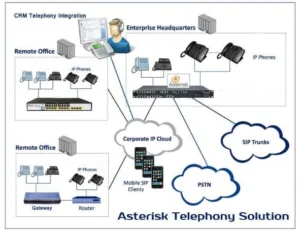
Just imagine a world where communication is not limited by phone lines, borders, or high long-distance costs. VoIP for communication already makes that possible by sending calls over the internet.
VoIP for communication has changed how people and businesses connect. It makes communication easier, more flexible, and often more affordable. Whether it’s a clear voice call or a smooth video meeting, VoIP is now more than a cost-saving option—it’s a modern platform shaping the future of communication.
In this article, you’ll learn how VoIP is transforming communication, its key benefits, and why it’s becoming popular worldwide.
How VoIP for communication is revolutionizing modern calling
VoIP has radically altered the face of communication by replacing conventional telephone lines with internet-based calling. What used to be limited to landlines is now available globally through the Internet, representing a major innovation in connectivity.
It makes communication cheaper and faster by reducing long-distance fees and enabling calls almost anywhere. VoIP for communication also ensures that businesses no longer depend on costly and outdated phone systems. Instead, they can adopt more scalable and feature-rich solutions that improve collaboration and operational efficiency.
In addition, VoIP enables individuals worldwide to remain connected in real time. With a reliable internet connection, communication can run smoothly across regions, removing many geographic limits.
The communication revolution driven by VoIP is not only due to cost savings but also the wide range of features — including video conferencing, call forwarding, and voicemail-to-email — that have transformed how people communicate and work together.
The Evolution of Communication Technology
Communication technology has evolved significantly over the years — from the telegraph to the traditional telephone and now to modern digital communication platforms.
With the invention and global adoption of the Internet, a new era of fast, reliable, and cost-effective communication emerged. Voice over Internet Protocol (VoIP) has played a major role in transforming how we interact with others.
Unlike traditional telephones that depend on analog signals transmitted through physical lines, VoIP relies on the Internet to transmit voice and data, making it a powerful digital alternative to legacy phone services.
This advancement not only improves voice quality but also enables unified communications — integrating voice, video, and messaging into a single system. As more businesses and individuals adopt VoIP technology, communication barriers continue to disappear, giving rise to a more connected digital world.
Benefits of VoIP Services
1. Cost Efficiency
One of the main reasons businesses and individuals are shifting to VoIP is the significant cost savings. Traditional landline communication can be expensive, especially for long-distance and international calls.
VoIP, on the other hand, transmits voice calls over the Internet, dramatically reducing communication costs without compromising call quality. For businesses that need reliable routes and responsive support, Seed Telecom provides VoIP solutions built for business-grade communication and global reach.
2. Flexibility and Mobility
VoIP allows users to communicate without being tied to a specific device or location. Whether you are using a smartphone, tablet, or computer, you can make and receive calls from virtually anywhere in the world.
This is particularly beneficial for businesses with remote teams or distributed workforces.
3. Advanced Features
VoIP has numerous features, including enhanced communications, such as call forwarding, voicemail-to-email, and call recording, as well as video conferencing, among several others. These capabilities improve productivity and collaboration, enabling teams to stay connected regardless of distance.
The efficiency of work and the satisfaction of employees are enhanced because employees can easily be in touch with their work teams, despite the distance factor.
4. Scalability
VoIP systems are highly scalable, making them suitable for businesses of all sizes. Whether you are a startup or a large enterprise, VoIP can easily adapt to your needs.
As your business grows, you can add lines or features without investing in expensive hardware upgrades. This flexibility renders it a viable choice for companies that require a communication system that is capable of expanding alongside the company.
Having talked about the many advantages of VoIP, it is apparent that the technology has far more to offer in terms of cost savings and flexibility than it is perceived to have. At this point, we shall explore further the main characteristics that render VoIP an effective communication-enhancing tool.
A growing online store with remote support agents can use VoIP for communication to route calls to available agents, set call queues, and keep costs predictable while serving customers in different countries.
For more insights on how VoIP can save businesses money and improve communication, check out The Top 10 Benefits of Using VoIP for Business.
Key Features of VoIP Technology
VoIP technology is provided with numerous options that can be used to promote communication and make it user-friendly:
1. Voice and Data Transmission
VoIP enables the transmission of voice and data signals on the Internet, thus creating a single communication experience. This has allowed users to make calls, send messages, and check emails on one platform, which has made communication more efficient.
2. Call Management Features
VoIP services offer enhanced call management functions like call forwarding, call waiting, call blocking, and voicemail. This is because of these features that make sure that the user does not miss any important call or message, whether one is in the office or on the go.
3. Video Conferencing
Video conferencing is another important aspect of VoIP, and it is particularly useful to businesses that have remote workers. With VoIP, it is not difficult to have a face-to-face meeting even when the distance between the teams is significant; people can work together irrespective of their physical location.
4. Virtual Numbers
Under VoIP, companies are in a position to obtain virtual phone numbers within various geographical locations. This provides the businesses with a local presence in various locations, where connecting with the customers and clients of the other parts of the world becomes easy.
If you’re interested in learning how to choose the right VoIP provider that fits your business needs, read How to Choose the Right VoIP Service Provider.
The Future of VoIP Communication
The future of VoIP for communication is optimistic, and many interesting developments are prevailing:
1. AI Integration
Customer service will be transformed by integrating Artificial Intelligence (AI) into VoIP systems. VoIP services will be implemented with virtual assistants that are driven by AI to assist in handling calls, directing them accordingly, and even answering frequent customer questions and issues.
2. Better Video and audio quality
As 5G networks are rolled out and the speed of the Internet improves, VoIP services will only keep on improving audio and video quality, providing a better communication experience.
3. IoT Integration
With the ever-growing Internet of Things (IoT), VoIP systems will be able to be integrated into different devices in the IoT, which will allow an easy flow of communication among the systems and devices that are connected to each other.
4. Mobile VoIP
Mobile VoIP will gain more popularity, and people will be able to make calls and use the complex features, making use of their mobile devices. This will support the increasing number of smartphone customers who are using mobile communication in their personal and professional lives.
For businesses that rely on international calling, Seed Telecom focuses on VoIP for communication with stable global routes, reliability-first delivery, and hands-on support. For business-grade calling, explore Seed Telecom’s VoIP services.
FAQ
Will call quality be clear on VoIP?
Most of the time, yes. Call quality depends on internet speed, network stability, and congestion. A wired connection (Ethernet) and quality routing usually improve clarity.
What internet speed do I need for VoIP for communication?
For voice calls, you usually need a stable connection more than high speed. Video calls require more bandwidth. If your network is shared, having QoS (Quality of Service) settings helps prioritize voice traffic.
What features do businesses get with VoIP?
Common features include call forwarding, IVR (press 1 for sales), voicemail-to-email, call recording, call queues, analytics, and virtual numbers—often without extra hardware.
Conclusion
VoIP has truly transformed modern communication by offering affordable, flexible, and scalable solutions for both individuals and businesses. As the technology continues to evolve — with AI integration, stronger security, and improved call quality — VoIP for communication is becoming an essential tool in today’s digital world. More exciting is yet to be unveiled in the future with the incorporation of AI, greater security, and improved quality of calls.
Technology of VoIP for communication is a tool that cannot be ignored in the contemporary world due to its continuous change in the way we communicate, as more businesses adopt the VoIP technology.
Want clearer calls, better reliability, and cost-effective global routes? Seed Telecom can help you upgrade with business-grade VoIP for communication.
Get in touch with SEEDTELECOM and upgrade your communication today to know the most appropriate VoIP solutions to use in your business. Below are our handles
🌐 Web: https://seedtelecom.org/contact/
📱 WhatsApp: +254 723 620 620
📧 Email: info@seedtelecom.org